In everyday life we increasingly try to reduce the time spent on things that consume a lot of unnecessary energy, so that we can focus on what really matters. Devices and gadgets help not only to save time but also to raise the level of comfort and improve quality of life.
In the past, in films we watched scenes where the owners of expensive villas simply clapped their hands to switch the light on or off. But what technology offers now is much more. What is more, it is available to everyone.
Voice control systems, or the smart home, offer a hands-free way to adjust lighting, thermostats, door locks and much more. In the USA these voice control systems are used by one in four adults, and the number is growing rapidly. In Latvia, meanwhile, they have only been available comparatively recently.
Voice control systems and devices
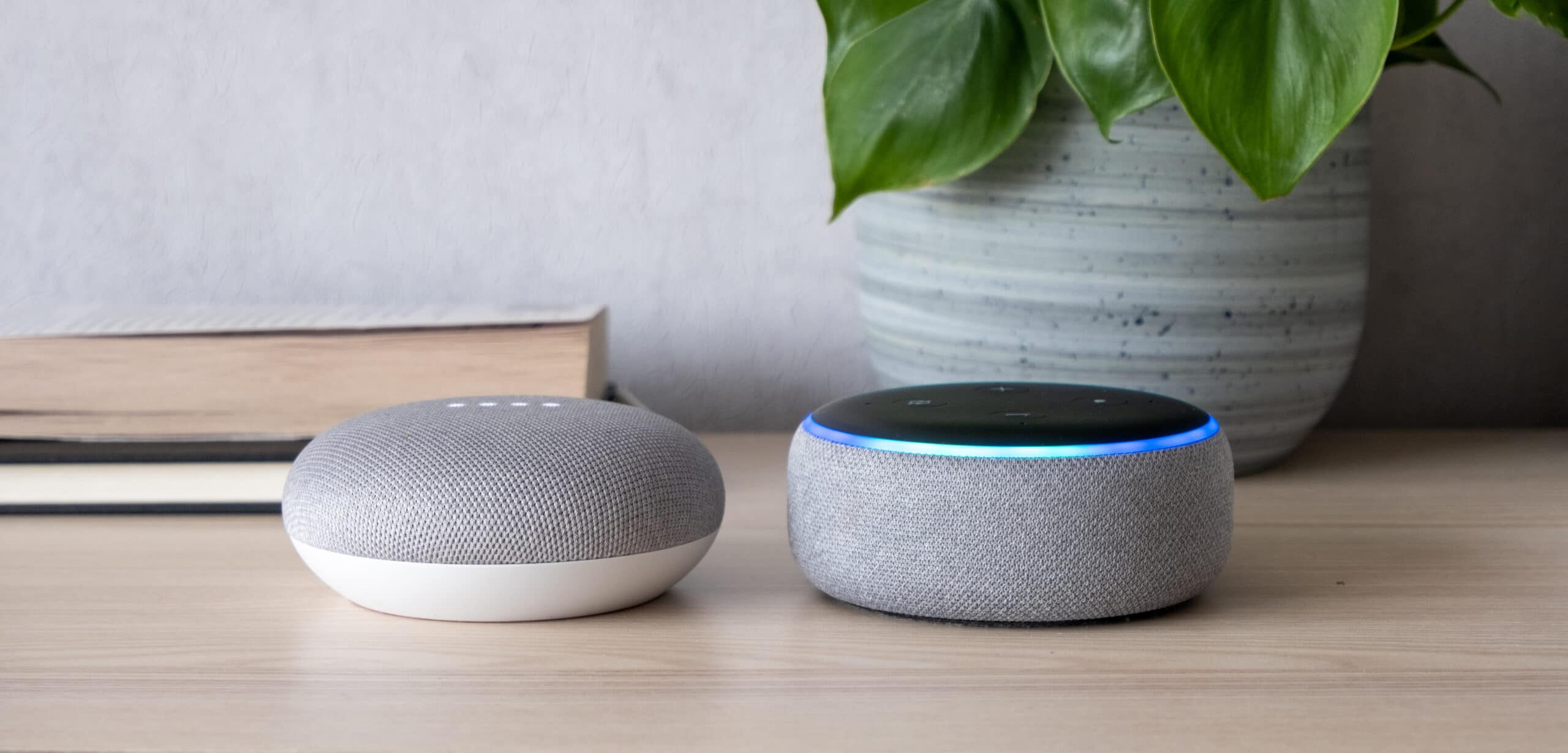
Two of the most popular and best-known voice control systems are Alexa and Google Nest. They offer various speakers, of which, for example, Alexa "lives" in the Amazon Echo speaker, while Google Home Mini will respond to "Hey Google".
Amazon Echo Dot vai Google Home Mini
Both smart control speakers can be connected to a range of other devices and work in a very similar way. They plug into the mains and work over a WiFi network. They can be connected to both iOS and Android smartphones. With their help you will be able to manage both Ledvance Smart+ and Philips HUE smart lighting, as well as listen to Spotify, ask questions, get answers and more. But given that the two are so similar - which one should you choose?
To be able to tell you about the products' advantages and disadvantages, we carried out product testing and compared the two devices.
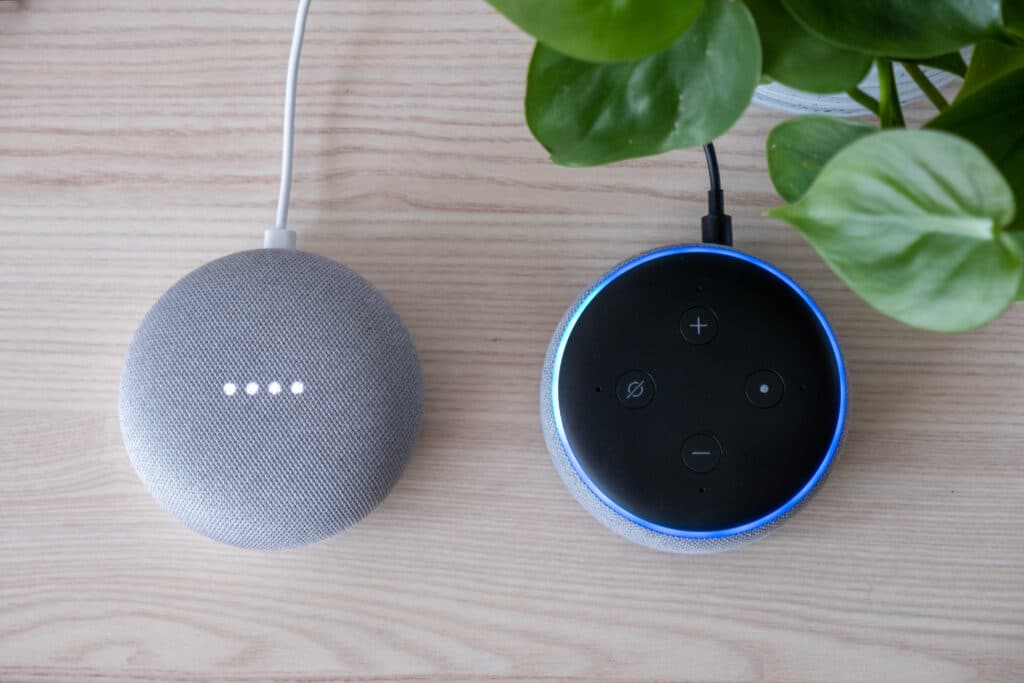
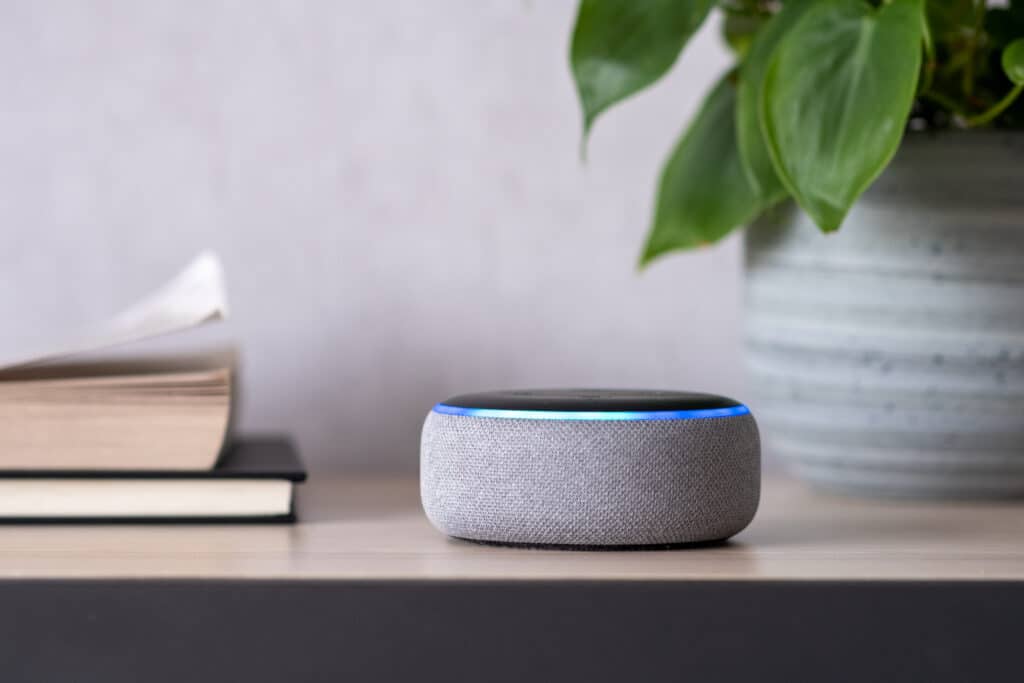
In visual terms, the Alexa Echo Dot may fit better in your home; its casing has built-in LED lights that light up when Alexa is listening or speaking. The Google Home Mini, by contrast, looks like a small, simple speaker resembling a button. In terms of sound quality too, the Amazon Echo Dot beats the Google product, which you can easily confirm by playing music. However, both products can be connected to other speakers via Bluetooth, and the Amazon Echo Dot also has a 3.5mm audio jack in case the speaker you want to connect does not have Bluetooth.
In terms of features and usability, in addition to the usability options already mentioned, unlike Alexa, Google can also be connected to Netflix, which can turn out to be very useful.
What is it like to talk to these platforms?
With both, you can ask questions, ask them to tell a joke, sing, announce the weather forecast, set an alarm or timer, and so on. However, during conversations you may come to the conclusion that Google Home is easier to talk to. When asking questions of the Alexa platform, you may often encounter a situation where Alexa does not know the answer to a question (or perhaps does know, but you used the wrong phrasing), whereas you can ask the Google Home assistant a series of questions and also receive more detailed answers on your smartphone. This does not mean, however, that Alexa is a choice to be dismissed - you simply have to learn how to use it, understanding what information to ask for and in what phrasing.
It must be admitted that, unfortunately, none of the platforms offer voice control in Latvian or Russian, so you should bear in mind that communication will take place in English. However, if you have a command of the language, there will be no problem. And if you have children, they will love these technologies and find them very useful.
Functionality in the children's room
If the child is a baby, you can play various sounds and also adjust the light in the room remotely. With Ledvance Smart+ and Philips Hue smart lighting, you can set suitable lighting or "play" with colours. If the child is older, Alexa and Google will tell fairy tales, jokes and also answer "why" questions. For school-age children, you can create a surprise and turn their room into a "smart room" - the child will be able to learn for themselves the benefits these technologies provide, especially if the room also has smart bulbs or luminaires - their temperature and light intensity can be set to suit different activities. Isn't that just the idea for a birthday or other celebration gift?
Price comparison
In terms of price there are no big differences - both devices are affordably priced. You can buy the Google Home for 41 EUR, while the Amazon Echo is available for 66 EUR.
Our conclusions
Which of the devices to choose depends on your wishes and needs. In terms of usability, Google Assistant may prove easier to manage. However, if you want to use the device to listen to music, we recommend buying Alexa - it could be compared to a small, smart JBL speaker that you control by voice - isn't that cool?
The excitement and discovery of the many possibilities, right after the first tries with the products, will make you want to "go further" and introduce more and more voice control technology into everyday life. Perhaps, thanks to Alexa or Google Nest, you will start using voice control on your phone too and use hands-free mode in the car (if you don't already). You will be able to forget about awkward situations when you need to switch on the light but your hands are full of heavy shopping bags, or you want to watch a film but that TV remote has gone missing somewhere again. And your children will be delighted.